Photos of a Tawny Owl chick with one parent - Kingsley 21.03.15 (by John Coe). This chick has appeared quite early for this species, which lay mainly during March with the eggs hatching 28-39 days. It is also notable for there being an only one as Tawny Owls typically produce 2 -3 eggs though a range of 1 - 5 is recorded http://blx1.bto.org/birdfacts/results/bob7610.htm. So maybe this pair only ever had one egg or other eggs or nestlings failed for some reason. Tawny owls are a single-brooded species, so once these parents have reared this youngster they can have a rest from childcare until next year!
Sunday, 22 March 2015
Saturday, 21 March 2015
Preparing for the Breeding Bird Survey
This morning I was out near Oakamoor doing the habitat survey in preparation for carrying out the full bird surveys in April - June.
I took these photos.
Part of my route through Lightoaks.
A mossy stone wall.
Western Hemlock plantation, Greendale.
Extensive patch of the liverwort Pellia epiphylla.
Two close ups of P. epiphylla showing the dark spherical spore-containing capsules.
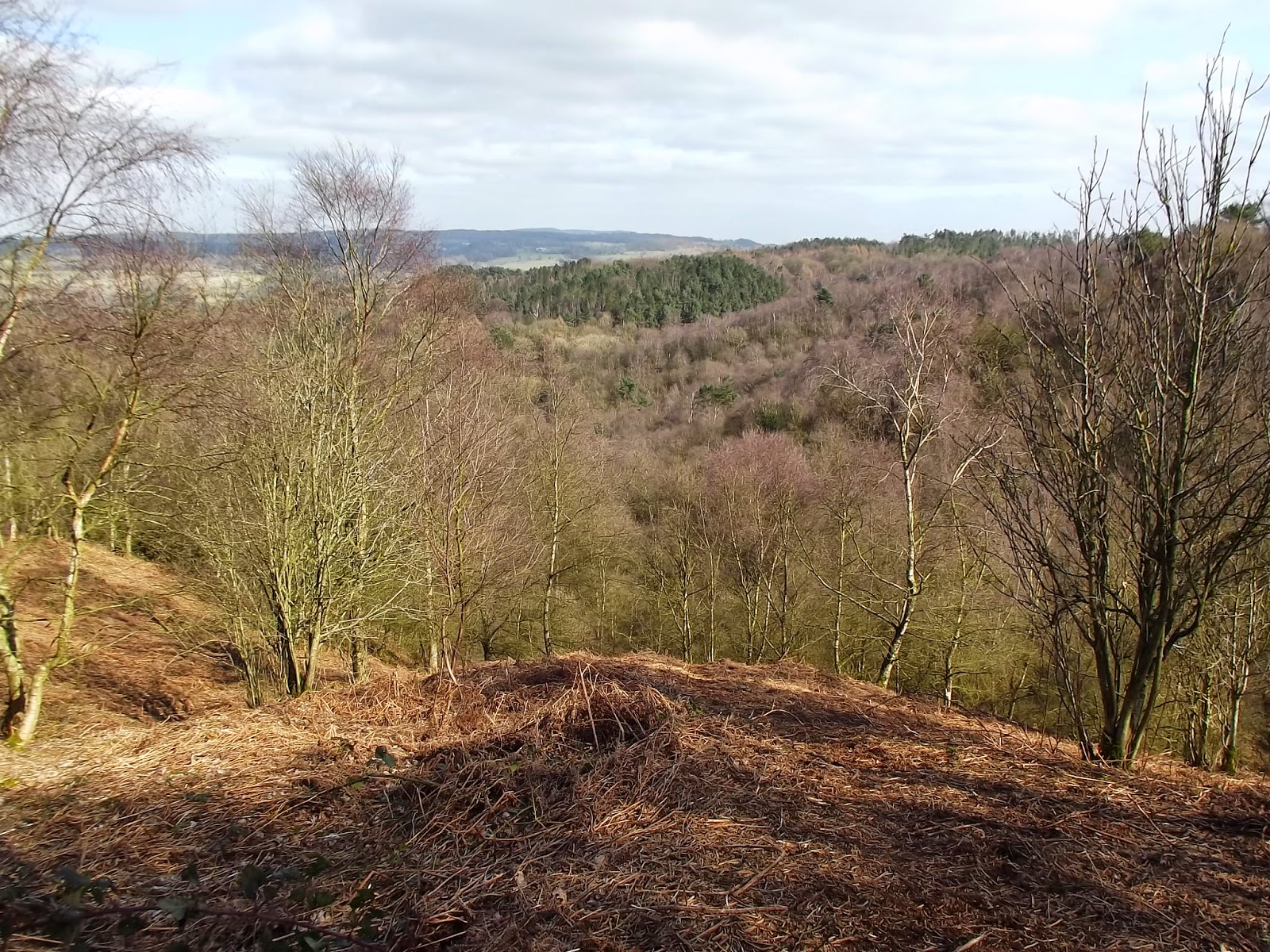
A view from Hawksmoor Nature Reserve.
Sunday, 15 March 2015
Butterfly sightings
I've seen my first active butterfly of this year - it was a Small Tortoiseshell fluttering around inside a church. This website gives a list of butterflies you may start to see from now on http://www.ukbutterflies.co.uk/flighttimes_earliest.php. Please let me know what you see, on what date and where in the Churnet Valley you saw it. Email me on wendy.birks@gmail.com
Small Tortoiseshell in St Luke's Church, Endon 12.03.15
Recent mammal sightings in the Churnet Valley
All these below found by Nott Mott from the Staffordshire Wildlife Trust during a visit to assess potential sites for habitat restoration projects along the River Churnet.
Otter spraint seen 11.03.15
Otter footprints seen Wednesday 11.03.15
Harvest Mouse nest in Reed Sweet Grass near Crumpwood Weir (used for breeding last year) seen 11/03/15
Harvest Mouse nest from near Crumpwood Weir 11/03/15
Thursday, 5 March 2015
100s of Gulls Following Ploughs
Yesterday near Wooton the fields were being ploughed in preparation for sowing or planting a crop and that is attracting 100s of gulls and 10s of crows to feed on whatever invertebrates are being turned up.
Meanwhile near the route of the former Uttoxeter Canal Dog's Mercury is starting to flower.
Saturday, 21 February 2015
Early spring flowers and a familiar fungi.
Walking along the Caldon Canal between Froghall and Consall yesterday we spotted early spring flowers and a fungi.
Female flowers of Butterbur. A native species which supplies a good source of pollen and nectar for early flying insects. Later in the year the, sometimes very extensive, patches of large leaves this plant produces can smother out other plants as does the reviled non-native Himalayan Balsam.
Elf Cup Fungi . There are two very similar species of this particular fungi Sarcoscypha austriaca and S. coccinea and I don't know which one this is. Its easy to spot if you look for dead branches on the woodland floor as its bright red colour stands out in contrast to the green of moss and other leaves.
Opposite-leaved Golden Saxifrage grows in damp, shady places. It is an evergreen plant so its leaves are present all year round. You have to look hard for the yellow, star-like flowers as they are only a few mm across; they are just starting to appear this week.
This photo of Wild Garlic was taken in a previous year - it isn't actually in flower just yet. However the new leaves of this species are just beginning to poke through the dried up remains of last year's autumn leaves. They are safe enough to eat as long as you pick some from a place where a dog in unlikely to have peed on them. Our hunter-gatherer ancestors must have welcomed the appearance of this plant coming back after the winter months as it was presumably one of the first fresh things they got to eat.
Monday, 19 January 2015
Footprints in the snow.
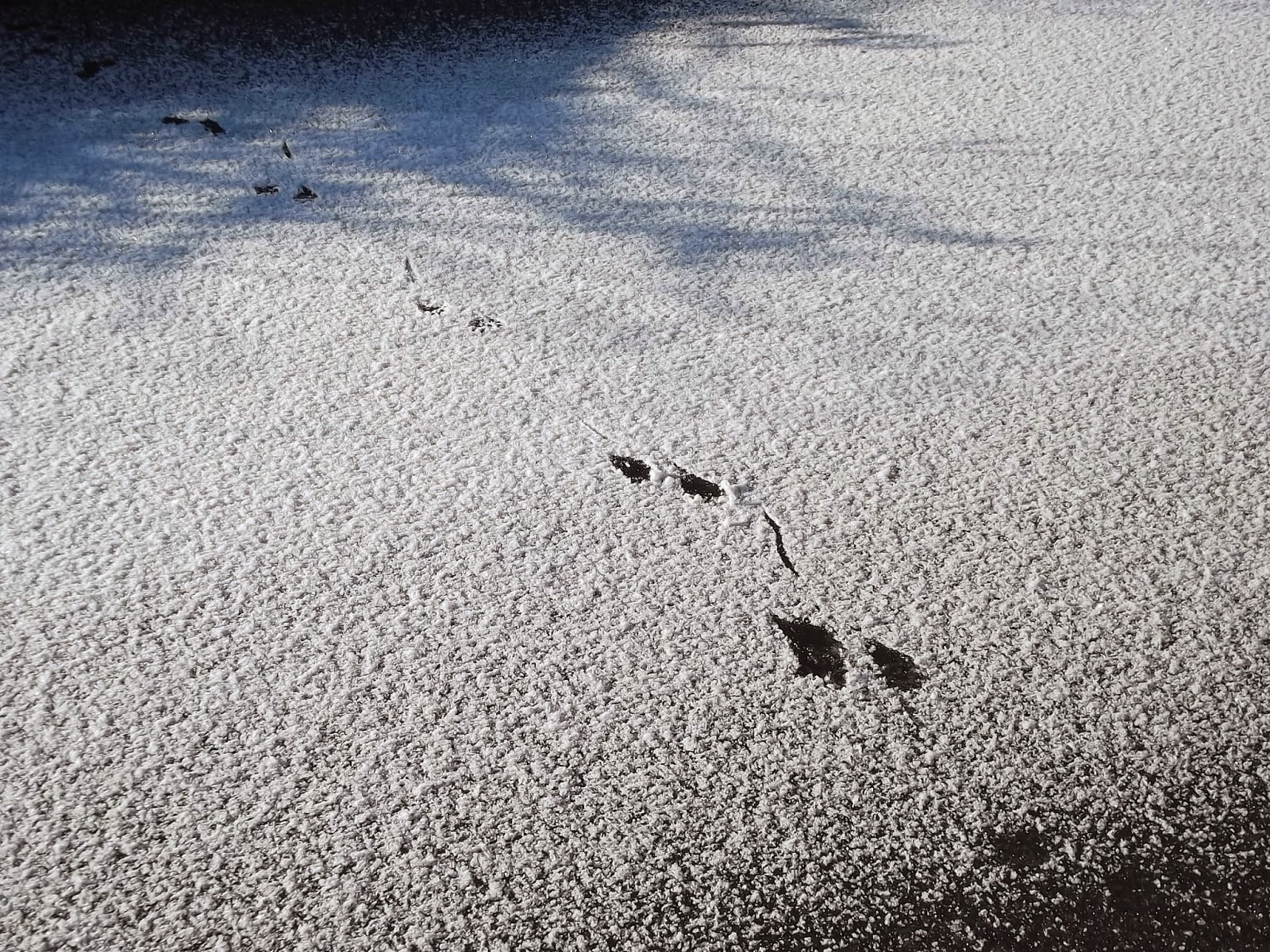
Yesterday was a good day to go out to look for sign of mammals. Here are prints of five species (fox, otter, rabbit, grey squirrel and a badger prints plus sett) photographed in the Churnet Valley.
Fox.
Fox.
Otter.
Otter
Rabbit back paws.
Rabbit front paws.
Grey Squirrel
Badger beeding trail across footpath.
Badger footprint
Subscribe to:
Posts (Atom)